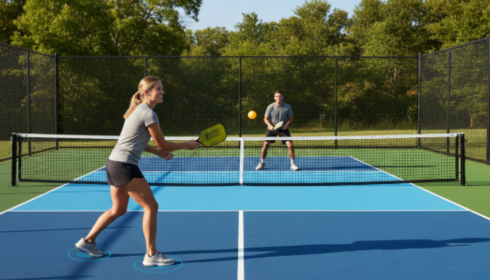
Pickleball is no longer a casual recreational sport limited to a few clubs or communities. Across India, commercial pickleball courts are now being developed in sports academies, schools, residential townships, hotels, clubs, and private sports facilities. As demand grows, so does the number of pickleball court construction companies offering installation services.
But here’s the reality: many project owners discover too late that building a pickleball court and building a court that performs consistently for years are two very different things.
Choosing the right pickleball court contractor is not just about finishing a project quickly or offering a low quote. It’s about understanding how the court will behave under heat, rain, foot traffic, and repeated play. This is where experience truly matters.
Why Commercial Pickleball Courts Require a Different Approach
Commercial courts see daily, high-intensity usage. Unlike a casual backyard setup, these courts must maintain:
- Consistent ball bounce
- Reliable grip for players of all age groups
- Surface durability under constant play
- Minimal downtime for repairs
A professional pickleball court installer understands that shortcuts taken during construction will always surface later as cracks, peeling coatings, slippery textures, or water retention issues.
That’s why experienced pickleball court contractors focus on much more than just surface appearance.
The Base Matters More Than Most People Realize
One of the most overlooked aspects in pickleball court construction is the base. Many failures occur not because of poor surface coatings, but because the base was rushed or improperly designed.
A seasoned pickleball contractor ensures:
- Proper concrete grade and compaction
- Correct slope for surface drainage
- Adequate curing time before surface application
If moisture remains trapped inside the base, even the best pickleball court surface material will eventually fail. This is especially critical for outdoor projects where weather exposure is constant.
Choosing the Best Surface for Pickleball Court Performance
Not all surfaces behave the same under Indian climate conditions. From experience, the best surface for pickleball court projects—especially commercial ones—is a professionally installed synthetic acrylic system.
Why?
- Controlled texture for safe movement
- UV stability to prevent fading
- Strong adhesion to concrete
- Easy resurfacing without demolition
High-quality pickleball court makers prefer acrylic systems because they allow performance tuning based on player needs, whether the court is designed for training, tournaments, or recreational play.
Understanding Pickleball Court Build Cost
Many clients ask about the pickleball court build cost or pickleball court cost to build early in the discussion. While cost matters, what matters more is what that cost actually includes.
An experienced contractor will clearly explain:
- Base preparation requirements
- Number of surface layers
- Cushioning (if needed)
- Line marking standards
- Long-term maintenance expectations
The cost to build outdoor pickleball court projects can vary significantly depending on usage intensity and location. Low-cost installations often skip essential steps, leading to higher pickleball court repair expenses later.
Backyard vs Commercial: Why the Same Approach Doesn’t Work
Searches for building a pickleball court backyard or the cost to build a pickleball court in the backyard are increasing, but commercial courts cannot be treated like residential projects.
In a backyard setup, limited daily usage allows for simpler systems. In contrast, commercial facilities require:
- Stronger surface bonding
- Higher abrasion resistance
- Uniform bounce across the entire court
- Faster drainage during monsoon conditions
Using a residential-grade approach for a commercial project often results in premature wear and frequent resurfacing needs.
Installation Quality Defines Court Lifespan
Even the best materials can fail if installing pickleball court surfaces is done without precision. Texture inconsistency, uneven layers, or incorrect curing times directly affect playability.
Professional pickleball court installers follow strict application processes:
- Layer-by-layer thickness control
- Uniform texture distribution
- Climate-aware curing schedules
- Accurate line marking alignment
This is where experienced pickleball court construction companies separate themselves from general contractors.
Planning for Maintenance and Repair from Day One
Every court will eventually need maintenance. The difference lies in how soon that happens.
A well-built court allows:
- Simple cleaning routines
- Localized repairs instead of full resurfacing
- Predictable resurfacing cycles
Ignoring this during construction leads to frequent pickleball court repair work that disrupts operations and increases long-term costs.
What to Look for in a Commercial Pickleball Court Contractor
Before finalizing a contractor, project owners should look beyond brochures and promises. Ask practical questions such as:
- How do you handle drainage design?
- What surface system do you recommend for high-traffic courts?
- How often will resurfacing be needed?
- Can repairs be done without shutting down the entire court?
Reliable pickleball court makers will answer these questions clearly—without vague assurances.
Why Experience Beats Speed in Pickleball Construction
Fast construction may look appealing, but rushed projects often pay the price later. A professional pickleball court contractor understands that proper curing, layering, and finishing take time—and that time protects your investment.
When done right, a commercial pickleball court becomes a long-term sports asset, not a recurring maintenance headache.
Why Choose Top Flooring for Commercial Pickleball Courts
Top Flooring focuses on performance-first pickleball court construction, not shortcut installations. Each commercial court is designed with proper base engineering, climate-suited synthetic acrylic systems, and controlled surface textures to handle high daily foot traffic.
Instead of one-size-fits-all execution, Top Flooring emphasizes long-term playability, predictable maintenance cycles, and consistent bounce, making the court a durable sports asset rather than a recurring repair project.
Final Thoughts
Choosing among pickleball court contractors is not just about who can build a court—it’s about who understands how that court will perform after thousands of games.
Whether you are evaluating pickleball court construction companies for a large sports facility or planning a premium installation, focus on experience, surface knowledge, and long-term value.
A court built with the right materials, installed correctly, and planned for real-world usage will always outperform one built on shortcuts—no matter the initial pickleball court cost to build.